Skip to content
Toggle main navigation
National Neighborhood Indicators Partnership logo
  • Home
  • About
    • Awards
  • Partners
    • Become a Partner
  • News
  • Events
  • Publications
  • Get Updates
MoreOpen dropdown to see remaining menu items
    Log in
    Contact
    National Neighborhood Indicators Partnership
    [email protected]
    Cookies
    Withdraw cookie consent
    Community engagement platform by Hivebrite.

    News

    News, insights, and impact stories from the NNIP network.

    Filter by category
    All
    Announcements
    Stories

    Highlighted News

    Results (23)

    Newest
    Four Ways Coordinated Data Can Expand Homeownership: Lessons from Milwaukee

    Four Ways Coordinated Data Can Expand Homeownership: Lessons from Milwaukee

    Update: According to new data that came out during the publication of this article, Milwaukee is beginning to move the needle on homeownership. New research found that Black and Latino homeownership is increasing in Milwaukee, reversing a trend from the great Recession, and that the demographic profile of new homebuyers in Milwaukee now more closely mirrors the city's overall population.Median hou
    June 8, 2026
    Partners in New York and Chicago Use Expertise from Local Work to Develop National Housing Tools

    Partners in New York and Chicago Use Expertise from Local Work to Develop National Housing Tools

    Across the US, housing costs are becoming increasingly unaffordable. Rents are rising while housing shortages are becoming more acute, and low to moderate-income renters and homebuyers are being left with fewer options that they can afford.Amidst this ongoing housing affordability crisis, two NNIP partners have drawn on years of research expertise to develop tools to assist policymakers, researche
    June 1, 2026
    Building a National Wealth Data Infrastructure Through Regional Partnerships

    Building a National Wealth Data Infrastructure Through Regional Partnerships

    Wealth enables communities to be resilient in the face of adversity, invest in opportunities, and build stability. Sustained wealth becomes generational, making it a clear indicator of the broader socioeconomic conditions of a place and inequities that may exist within it. Researching wealth enables us to go beyond short-term trends to uncover patterns about how economic and social resources are d
    June 1, 2026
    Linking health care and social services data for impact in Charlotte

    Linking health care and social services data for impact in Charlotte

    Originally posted here on April 14, 2026 by UNC Charlotte Urban Institute.By Rachel George, Ph.D., Sydney Idzikowski, Carlene Mayfield, Ph.D., and Pooja PalmerThe Charlotte Regional Data Trust brings together data that typically exist in silos to better understand the complicated issues our communities face.For instance, when you go to the doctor, information is collected and stored about you and
    May 22, 2026

    NNIP Welcomes Strategic Spartanburg, Inc. as Its Newest Partner

    NNIP Welcomes Strategic Spartanburg, Inc. as Its Newest Partner

    The National Neighborhood Indicators Partnership (NNIP) is pleased to welcome Strategic Spartanburg, Inc. (SSI) as its newest partner, representing Spartanburg, South Carolina. SSI is our first partner in South Carolina, and their work closely aligns with NNIP’s mission to support communities in using data to inform strategies and investments so that all neighborhoods can thrive. They have also de
    April 27, 2026
    Combining Data and Storytelling to Shift the Narrative for Georgia’s Latino Community

    Combining Data and Storytelling to Shift the Narrative for Georgia’s Latino Community

    Latinos across much of the US have long been undercounted in the census, mischaracterized, misunderstood (PDF) or excluded (PDF) from research. This lack of accurate information has real consequences for how public policies are shaped and how resources are allocated. The same is true in Georgia, a state more than 1 million Latinos call home. They make up 11 percent of the state’s population, yet m
    March 25, 2026
    Integrating Arts and Data to Reimagine Community Knowledge

    Integrating Arts and Data to Reimagine Community Knowledge

    The National Neighborhood Indicators Partnership is excited to share a new brief (PDF) on the intersections of arts, culture and data by Urban Institute author Mark Treskon.   Local data initiatives help people understand and measure local arts and culture ecosystems and their impacts on communities. These community-based efforts can make use of lived experiences and local knowledge in a way that
    March 2, 2026
    Two New Members Elected to the NNIP Executive Committee

    Two New Members Elected to the NNIP Executive Committee

    The National Neighborhood Indicators Partnership (NNIP) was founded by the partner organizations, and it continues to be led by an Executive Committee of elected partner members who help steer the direction of the network. NNIP is pleased to announce two fantastic additions to the Executive Committee — Amy Rohan, program manager of data access and community engagement at Data You Can Use, and Lysa
    February 24, 2026
    Learn about Local Data Collected by NNIP Partners

    Learn about Local Data Collected by NNIP Partners

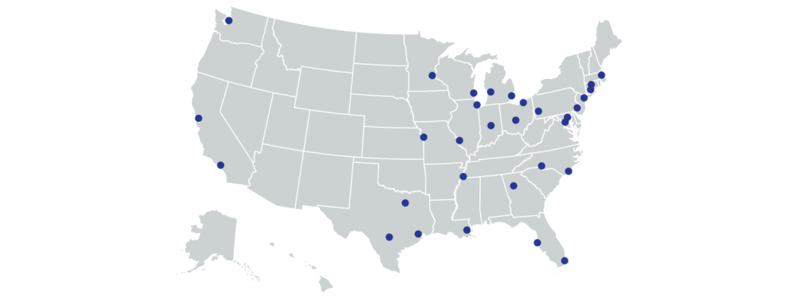
    Coordinated by the Urban Institute (Urban), the National Neighborhood Indicators Partnership (NNIP) is a network of local organizations in more than 30 cities that assemble, transform, and maintain data about their communities. NNIP Partners are committed to helping local governments, community organizations, and foundations use this information to shape strategies and investments so that all neig
    December 12, 2025
    Helping Communities Respond to the Impact of Climate Change on Housing (Video)

    Helping Communities Respond to the Impact of Climate Change on Housing (Video)

    Climate change is already affecting housing availability, affordability, quality, and safety. Impacts from related environmental hazards and severe weather like rising temperatures, flooding, droughts, and wildfires are projected to worsen in coming years as climate change advances. These climate hazards are threat multipliers for housing affordability and accessibility as they reduce the availabi
    November 24, 2025
    How Cities Can Fill Federal Safety Net Gaps in Child Care and Early Learning

    How Cities Can Fill Federal Safety Net Gaps in Child Care and Early Learning

    As federal funding for safety net programs declines, local communities are facing mounting pressure to fill the gaps with fewer resources and tighter budgets.Child care and early learning programing are an essential part of the safety net that yield wide-ranging benefits for communities. Theysupport healthy development and strengthen school readiness for children,enable parents to fully participat
    October 15, 2025
    Two NNIP Partners Awarded RWJF Grants from the Local Data for Equitable Communities Program

    Two NNIP Partners Awarded RWJF Grants from the Local Data for Equitable Communities Program

    Two member organizations of the National Neighborhood Indicators Partnership (NNIP) received grants in July 2025 through the Local Data for Equitable Communities program. The program is a collaboration between the Robert Wood Johnson Foundation (RWJF) and the Urban Institute that helps nonprofits use data to catalyze local action, address inequities, and ensure all residents can live their healthi
    September 2, 2025
    NNIP Welcomes Cape Fear Collective of Wilmington, NC as Its Newest Partner

    NNIP Welcomes Cape Fear Collective of Wilmington, NC as Its Newest Partner

    The National Neighborhood Indicators Partnership (NNIP) is proud to welcome Cape Fear Collective (CFC) as our newest partner, representing Wilmington and the broader Cape Fear region of North Carolina.Founded in 2019, CFC is a nonprofit organization rooted in the belief that equitable access to data is essential for creating lasting, community-centered change. The organization emerged in response
    August 28, 2025
    Milwaukee Shows How Resident-Led Data Can Transform Housing for Communities

    Milwaukee Shows How Resident-Led Data Can Transform Housing for Communities

    In Milwaukee, a city shaped by aging housing and deep-rooted racial segregation, a coalition of neighborhood organizers are harnessing community-led data to mobilize residents, reclaim neighborhoods, and rewrite a legacy of disinvestment—showing how locally generated data can be a force for equity, advocacy, and transformation. Credit: Amy Rohan, Program Manager at Data You Can Use MilwaukeeHow Mi
    August 8, 2025
    What’s the Key to Preserving Unsubsidized Affordable Housing?

    What’s the Key to Preserving Unsubsidized Affordable Housing?

    Housing is increasingly unaffordable across the US. Rents are creeping higher, homebuyers are increasingly being priced out, and renter cost burdens have reached record highs. People in communities who have already been left behind are at risk of getting further boxed out.This makes preserving unsubsidized, lower-cost rental buildings for those with low and middle incomes more important than ever.
    July 16, 2025
    Using Data to Embed Equity into Selecting Future Regional Trails in the Columbus, Ohio, Area

    Using Data to Embed Equity into Selecting Future Regional Trails in the Columbus, Ohio, Area

    Recent research shows trail networks help achieve climate resilience, improve public health, and increase economic prosperity. The Mid-Ohio Regional Planning Commission (MORPC) provided data and analysis to help local governments understand the regional impact of the Central Ohio Greenways (COG) trail system and establish criteria to prioritize trails to fund and build that included equity as a ke
    November 26, 2024
    Decreasing Social and Economic Disparities in San Antonio and Bexar County, Texas

    Decreasing Social and Economic Disparities in San Antonio and Bexar County, Texas

    Community Information Now (CINow) supports the vision of the United Way of San Antonio and Bexar County (UWSA) for a San Antonio where educational disparities by race and income disappear, families have the support they need to provide for their children, and employers eliminate gender- and race-based wage disparities. To realize this vision, UWSA’s investment strategy has been guided by four Impa
    September 9, 2024
    Local Data Are Key to Closing the Racial Wealth Gap

    Local Data Are Key to Closing the Racial Wealth Gap

    The racial wealth gap is a powerful number—it captures the structural racism that’s been baked into the American economy and social institutions, continued uneven opportunities, and hopes for a future of shared prosperity. But limited data on wealth exist. Well-respected national surveys like the Survey of Consumer Finances or Survey of Income and Program Participation (SIPP) provide broad insight
    July 1, 2024
    It’s About the People: Cocreating Antidisplacement Strategies in the Twin Cities

    It’s About the People: Cocreating Antidisplacement Strategies in the Twin Cities

    The Blue Line Extension, which will expand the light rail northwest from downtown Minneapolis to North Minneapolis, Robbinsdale, Crystal, and Brooklyn Park, has been planned for over a decade. During this time, communities along the corridor have been organizing to fight for antidisplacement measures and to ensure residents benefit from any development, highlighting that “it’s not about the train,
    June 7, 2024
    Local Housing Data Are a Critical Tool for Building Black Wealth

    Local Housing Data Are a Critical Tool for Building Black Wealth

    For more than a century, economic exclusion and racist and discriminatory public policies and practices in the private sector have led to a persistent racial wealth gap in the US. Evidence suggests clear structural barriers and discrimination remain to building wealth through homeownership, including predatory lending, appraisal bias, and bias in automated valuation models. In fact, the Black-whit
    February 29, 2024