
NNIP Partners Leverage Data and Partnerships to Increase Voting
Community groups, activists, and Get Out the Vote (GOTV) organizers need better tools and information to help inform and target their outreach efforts and track progress. Two NNIP members in Hartford, Connecticut and Twin Cities, Minnesota are collaborating with their city’s voter engagement groups. Their efforts can inspire other places to form partnerships to provide new tools and information for grassroots community change efforts.
Voter Outreach in Hartford
Since 2020, CTData Collaborative (CTData) has been working with members of the Hartford Votes Coalition and other groups engaged in Get Out the Vote (GOVT) efforts to provide data and coaching to help individual organizations plan their strategy for engaging prospective voters and help the coalition strategize collaboratively across the city and identify non-partisan advocacy priorities related to civic engagement. By attending the monthly coalition meetings, CTData gained an understanding of the questions GOTV groups have and created a variety of data supports to make their outreach more effective. For example, CTData created a data story with maps of the voting turnout for the last municipal election. They then held a data walk to help the groups learn how to use the charts in their work and to hear feedback to improve the analysis and graphics. As one result, CTData built a Neighborhood Explorer showing the voting data alongside data on the languages spoken at home – critical information in a city where 43 percent of the individuals speak a language other than English at home.
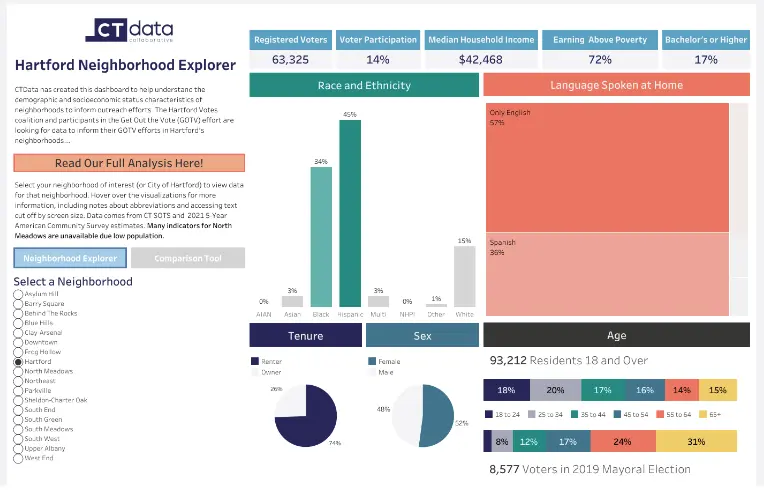
CTData is also helping them develop processes to document their program activities, such as the number of voters registered and turnout for their events. Each organization can use this data for their own strategy, and the coalition can look across the data to identify areas of duplication or gaps in coverage. Another map overlays the number of potential voters who are not registered block by block with a street layer to assist groups as they plan their operations on the ground to reach the blocks with the greatest opportunity to increase turnout. Finally, CTData is undertaking a qualitative research project to understand why people do or do not vote in their own words and identify structural barriers that hinder participation. To learn more about this collaboration, visit CTData website at https://www.ctdata.org/vote.
Voter Outreach in Minnesota
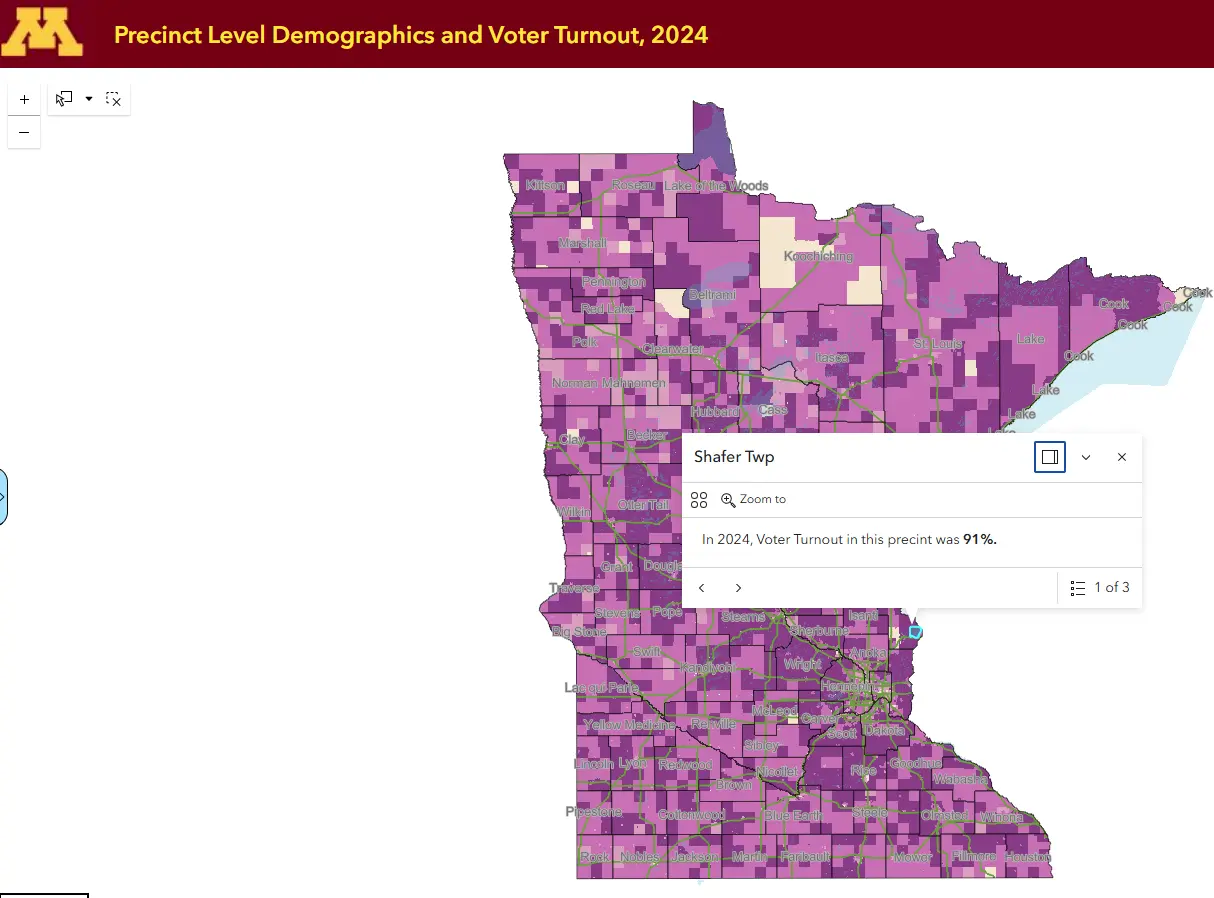
In Minnesota, voter engagement groups formed a partnership with the Center for Urban and Regional Affairs at the University of Minnesota (the Twin Cities NNIP partner), Wilder Research, and the Secretary of State’s office. Together, they developed a statewide precinct-level web application combining voter turnout with detailed demographic information. The tool included additional layers correlated with low turnout, such as the share of renters or young adults. Users across the state can filter by city or county and export the data. The community group Voices for Racial Justice actively publicized map and trained hundreds of volunteers on how to use the data to target outreach to areas with low voter turnout.
CURA is completing several updates and improvements to the portal. The new portal includes data on turnout from the 2024 election and a layer showing the change in turnout percentage from 2022 to 2024. The bivariate race maps, showing turnout combined with race and ethnicity, have been updated reflecting the 2024 election results. They will soon add a final layer showing margin of victory in 2024, so organizers can target swing districts. Visit the new portal at z.umn.edu/vote2026
In addition to the mapping tool, CURA is working with the Minnesota League of Women Voters for the upcoming 2026 election to enable targeted mailing lists based on low turnout areas and voting history of registered voters. The League purchased lists of registered voters and election results going back to 2000 from the Secretary of State's office. Combining these files with turnout data, CURA can respond to specific requests such as a mailing list of registered voters under the age of 25 who didn't vote in the last election in low turnout precincts in St. Paul.
The Minnesota Council on Foundations' Civic Resilience Fund will provide $300,000 to 12 nonprofits for voter engagement, providing resources that enable the groups to engage with the data and tools to plan their outreach
Thanks to Jeff Matson from the University of Minnesota and Sarah Eisele-Dyrli from Connecticut Data Collaborative for sharing their work for this article.